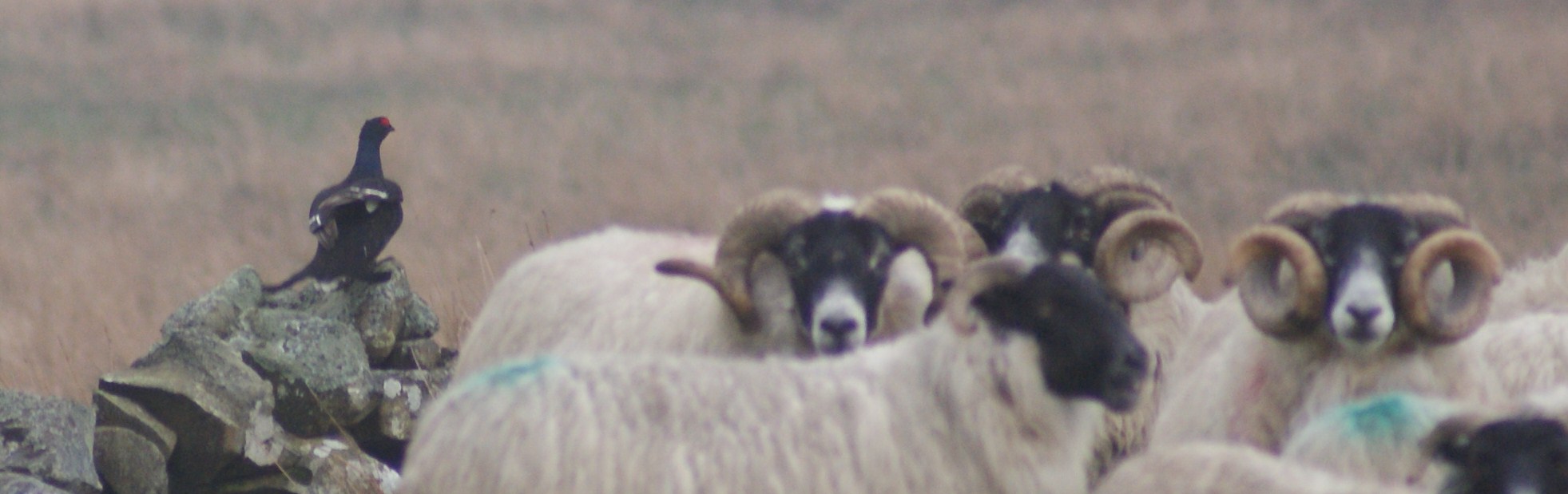
The blackcock is back on his old lekking ground. After an absence of two weeks, he has returned a few days ago to precisely the same spot that he used last year. An early rising friend saw what he thought was a greyhen with him last week, and although his report was extremely exciting, I can’t quite be certain without seeing it for myself. If he has brought back a greyhen so that he can display to her in an arena of his choice, it blows many of the conventional lekking behaviour theories out of the water.
While it’s not unheard of for blackcock to pursue and lek to greyhens, it is unusual. Generally, a greyhen will visit a blackcock to mate, not the other way around, so the fact that my bird appears to have headed off into the great unknown, found a partner and brought her back with him is very odd. Then again, it is also very unusual for birds to be living in such disparate and scanty populations, so nothing should surprise me, least of all this desperate measure.
In theory, the greyhen should have been mated by now, and she should be sitting on eggs. Greyhens normally nest within a mile of where they were served, so although I think I have an idea where she might be, I can’t be certain. If it’s too late to get a look at her now, I will have to keep fingers crossed that when I finally do see her, she will have a few young birds with her.
In the meantime, the blackcock continues to lek and sulk all across the tup field. He has incredibly sharp eyesight, which makes photographing him very difficult. This photograph (above) was only taken after a painstaking stalk through a field of curious tups (also pictured).
If you can catch him from a car window while he is lekking, he is one of the easiest birds to watch close up, but try on foot and he immediately stands up like a wine bottle on full alert. He picks up even the smallest movement and freezes, neck stretched, watching with fixed concentration. He’s not a coward, but he can’t afford to be careless.

 Bog Myrtle & Peat
Leave a comment