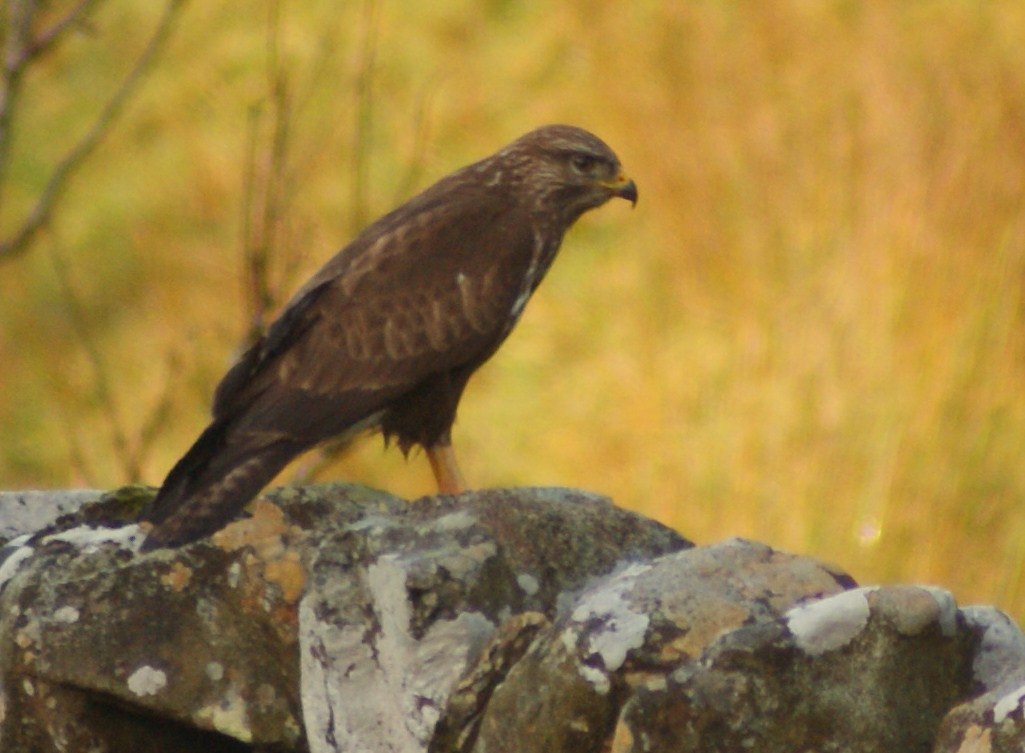
Writing about birds of prey can quickly lose its appeal. Although I was bombarded with abuse earlier this year for daring to write about the hen harrier, I can’t help chipping in on a bird that is fast becoming a serious problem. From the perspective of an obsessive lover of Scottish moorland, one of the most pressing issues currently effecting my day to day life is the ever growing number of buzzards on the hill.
Regular visitors to this blog will know that I am very fond of some bird of prey species. I am extremely proud to have short eared owls on the farm, as well as a variety of breeding hen harriers, peregrines and merlins. I am not a rabid anti-raptor enthusiast and I would never even consider taking the law into my own hands. However, the time has surely come to ask some important questions about buzzards.
Numbers grow every year, and buzzards are increasingly being found in habitats far away from their traditional lowland haunts. Despite stubborn and enfuriating denials from the RSPB and others, there is no question that these birds eat more than simply “carrion and small mammals”. They are capable of killing (and frequently kill) a variety of different animals, and they are having an impact on ecosystems which, in many areas, are currently depressed or struggling. Contesting that fact is ridiculous.
Having seen (for the second time in 9 months), a buzzard killing an adder this morning on the Chayne, I wondered if there will ever be a time when we can link the decline of nationally endangered species with the rise of this “jack of all trades” hunter.
Adders are at great risk of extinction in Britain, yet here was a ubiquitous and legally hallowed raptor “doing one in”. I was powerless to intervene, and watched a bird defended as a carrion feeder ripping the head off an extremely rare reptile. Tell this anecdote to a buzzard enthusiast, and it will simply be discounted as an unusual rarity. It doesn’t take many “unusual rarities” to destroy a struggling population of adders.
Three years ago, I watched as a buzzard swept low over a drystone wall and sank its talons into a plastic pigeon decoy. I was with a witness, and I can show the talon marks in the decoy to anyone who doesn’t believe me. A woodpigeon is larger than a grouse, so it is not too much to expect that red grouse are also on the buzzard’s menu. Along with curlews, oystercatchers, lapwings and a variety of other ground nesting birds, including black grouse poults. The “sudden pounce” technique used to catch other birds may not be the only tool in the buzzard’s hunting armoury, but the fact remains that these birds can kill other birds, mammals and reptiles, and every year there are more of them.
What does the government propose we do about buzzards? Do we allow them to reproduce until they reach saturation point? We are told that the population will “balance itself”, despite the fact that no other species has ever been able to reach this mysterious ideal without catastrophic crashes or long term human intervention. Is it so important that tourists can look out of their caravan windows and marvel at the majesty of a soaring buzzard, despite the fact that it comes at the cost of any number of other species?
If there were rising numbers of any species except raptors, legislation would be passed to control them. Thanks to their hooked beaks and sharp claws, buzzards appear to be above criticism. The situation is unsustainable. This “more the merrier” approach to buzzard legislation is going to end in tears.

 Bog Myrtle & Peat
Leave a comment