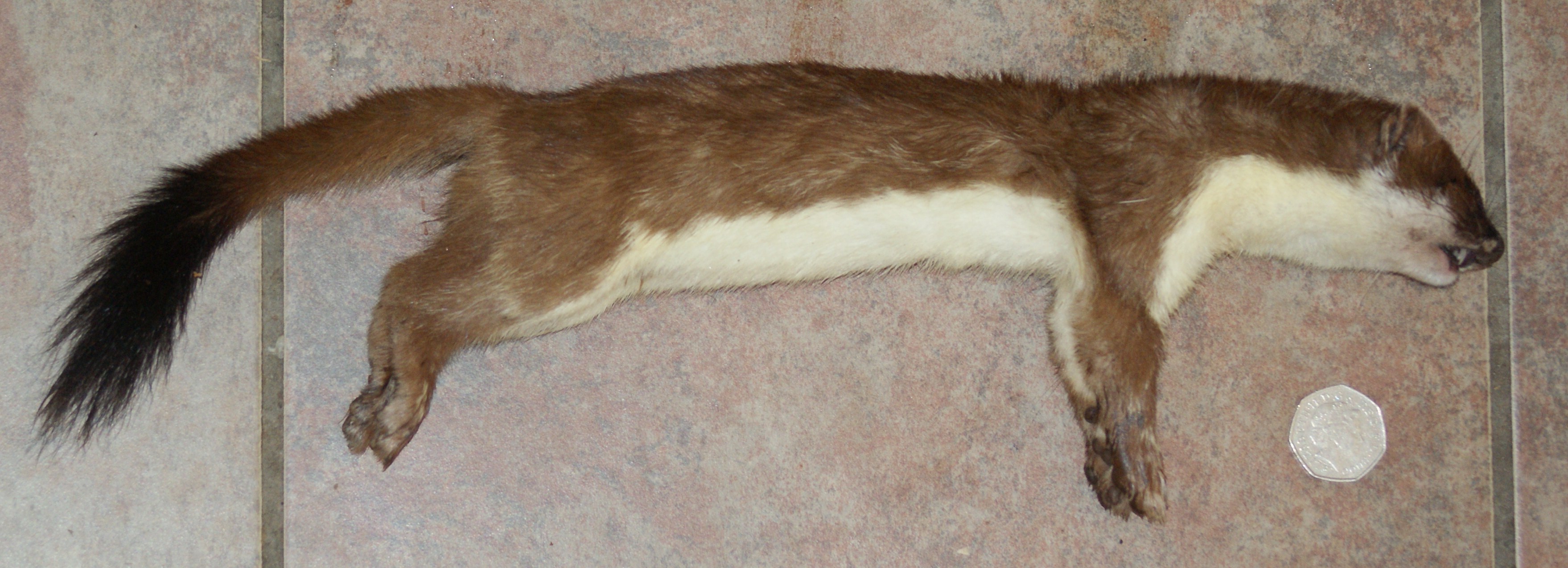
Trapping continues on the Chayne, although the last few weeks have seen a major drop-off in the number of weasels being caught. For a short period at the end of March, I was catching several weasels a day, but with the exception of the occasional straggler, the traps have been ominously quiet throughout April. After spending this morning planting a few last-minute scots pines and aspens in the new wood, I walked my circuit of fourteen Mk.4 and Mk.6 traps on the way back to the car.
Having found that all traps were unsprung, I headed for home along a well-used track which took me past a final Mk.4, set at the base of a gateway where I caught my ermine at the start of March. Peering into the gloom of the covered box, I saw that the trap had sprung, but it was so dark inside that I couldn’t see what I had caught. As I moved the stones and turfs away from the roof of the trap box, I saw that whatever I had caught was so large that it was blocking the tunnel altogether.
As the timber roof came off the trap, I looked down on a seriously impressive male stoat. Having got used to dealing with weasels over the past few weeks, a stoat was always going to look big by comparison, but this brute was a real monster. After taking him out of the trap and resetting it, I took him home and compared him to the ermine which is still sitting in my freezer. He was four inches longer, measuring a fraction less than nineteen inches from nose to tail. On the scales, he weighed in at just under a pound, making him not only the largest stoat I have caught so far, but also the largest that I can find any record of in reference books. Although he was in his summer coat, he still had several longer white hairs along his sides and flanks which suggest that he was white just a few weeks ago.
After almost five months of trapping stoats and weasels on the Chayne, I have learned a huge amount about these fascinating predators. The GWCT predict that on decent heather moorland, numbers of trapped stoats will roughly match the number of weasels. However, the Chayne can in no way be described as “decent” heather moorland, and with a predominance of grasses and rushes, weasels were always going to be more abundant. That said, I had not expected that I would catch more than eight weasels for every stoat.
From what I can gather, stoats are generally solitary creatures, and they stick very closely to their territories. I wonder if I will start to catch more stoats in the vicinity of where I caught this monster as his subordinates begin to move into his territory over the next few weeks.

 Bog Myrtle & Peat
Leave a comment