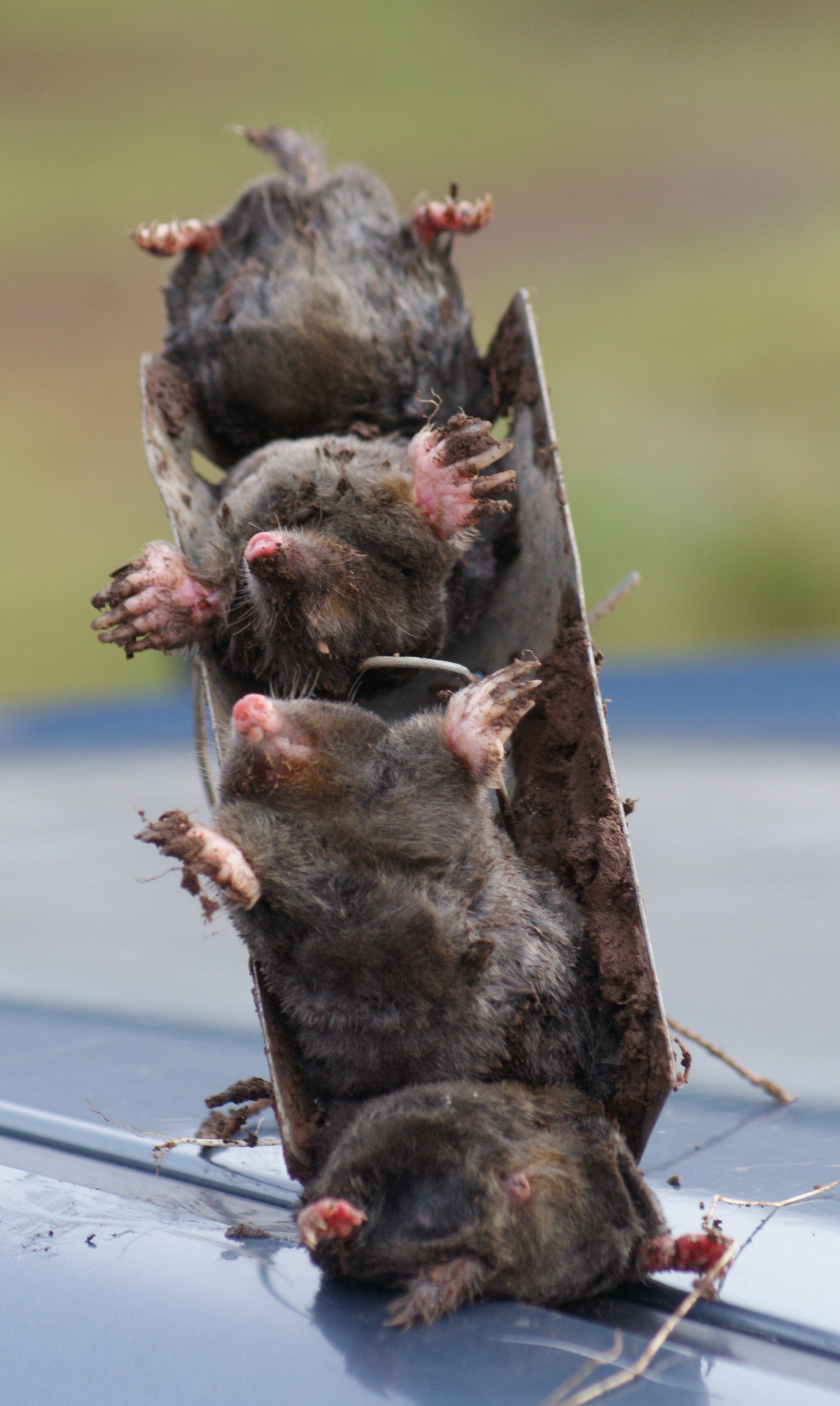
Moles are becoming more active at the moment, and they provide a welcome boost to my wallet in the cold, dark days of early spring. I have been catching moles for the past eight years, and I am gradually getting better at it. Even the most experienced mole catcher is still learning every time he catches a mole, and there is no quick fix to success with mole traps. I must have caught thousands of the little terrors by now, but every time I set a trap, I still worry that I haven’t got things just perfect. There is such a wide variety of runs, soils and even mole personalities which means that when I am called out to catch a mole, I never know what to expect.
I finished a mole catching job this morning in a garden down by the Solway coast after an unusually long engagement. The pattern and arrangement of the hills led me to believe that I was dealing with three moles; two males and a female, but after two nights of trapping, I had only suceeded in catching the female. I knew that my traps were in a good place, and rather than moving them around frantically, I decided to take my time and wait for a change in the weather. It is still early in the mole catching season, and I didn’t need to force the issue.
Moles have a variety of different tunnels which they check according to where the worms are operating. Worm movements are dictated by barometric pressure, so moles will often hunt in some areas of their tunnel networks during mild weather and others during hard weather. I learned early on that not catching a mole in a trap within 48 hours does not mean that failure is guaranteed. It is often a good idea to trap when a change in the weather is coming, so that if you don’t catch to start with, you might after the pressure has altered.
It was exactly the case with the two male moles I was looking to catch in the garden. We had a chilly night last night after a series of mild days, and I was delighted to find both males “nose to nose” in my Duffus barrel trap this morning. Problem solved!

 Bog Myrtle & Peat
Leave a comment