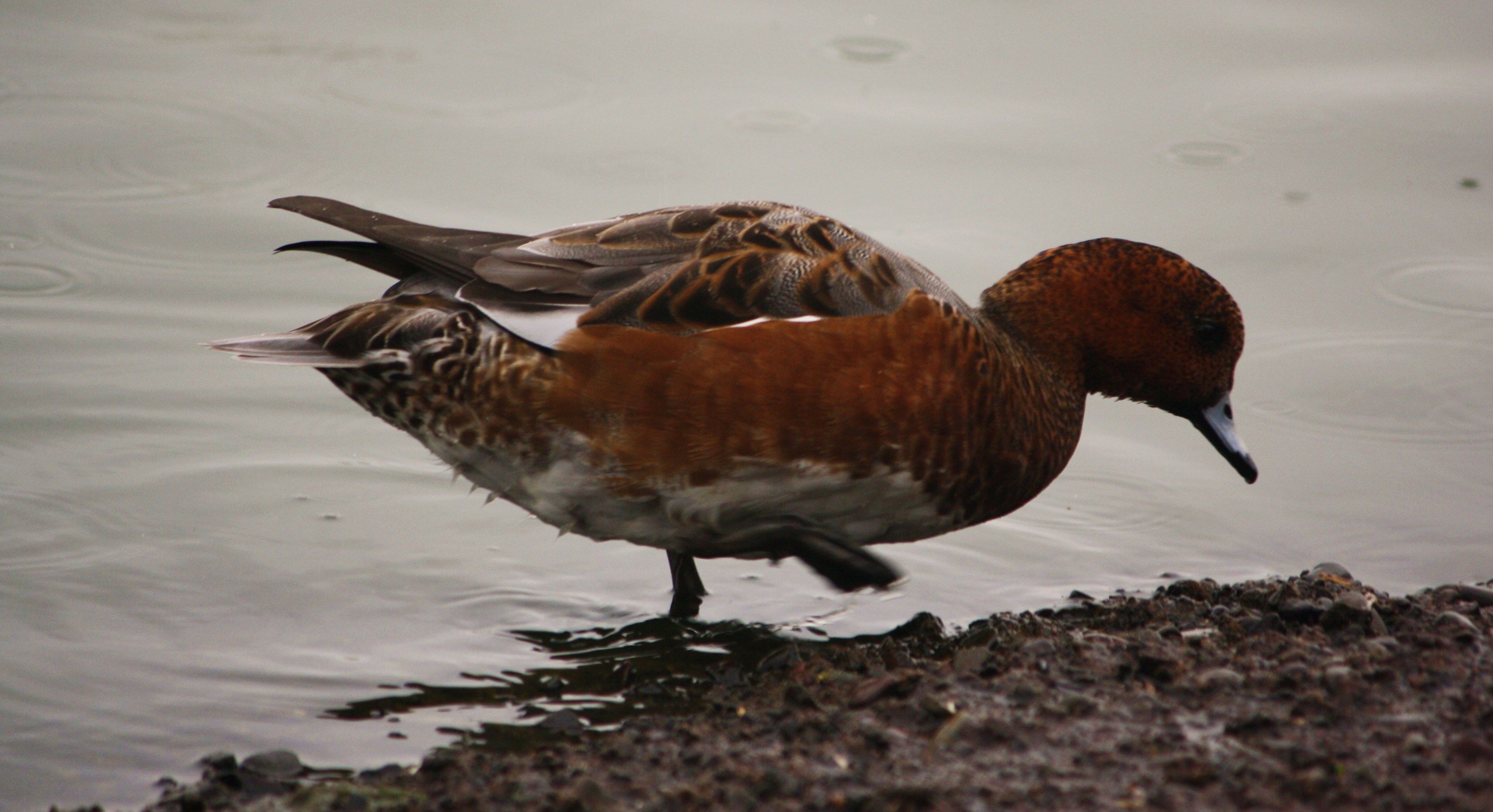
Exactly 13 months ago, I visited Caerlaverock wildfowl sanctuary to find out a bit more about wigeon; the most fantastic species of wild duck to be found in Galloway. Caerlaverock has several resident birds which don’t head north to Scandinavia and Northern Russia, and I managed to have a look at one or two of them in their summer “eclipse” plumage, in which the cock’s naturally stunning arrangement of speckles and stripes becomes dull and mottled like the hen.
All the birds I see down on the estuary when I’m shooting in December have gone by the middle of February, so seeing how they look for the rest of the year was a real reveletion. That familiar squeak reminded me of countless mornings in the burning cold, melting a cushion for my numb arse in the frozen mud while the stars gradually fade and the ducks splash down into the rising tide like meteors. Usually, the first birds arrive on my stretch of the estuary in the second week of November, then move on south to be replaced by the real winter residents in the first week of December. Goldeneye and mallard start to appear from the end of October, and I saw my first spring of teal while out ferreting the other day.
The days may be getting shorter and the nights noticeably colder, but with wildfowl reserves in northern Scandinavia reporting large daily movements of smaller dabbling ducks, it looks like the first wigeon are on their way!

 Bog Myrtle & Peat
Leave a comment