As I learned a fortnight ago, toadstools have excellent names. Discovering a colony of the awesome “sickener” in the woodcock strip had me examining the ground very closely before stepping anywhere else, and the more I have got into the habit of looking for fungi, the more I have found.
It makes me look dull and ignorant to say it, but the majority of toadstools I have come across have been boring. I am sure that each one is fascinating in its own unique way, but unless something looms menacingly out of the undergrowth towards me, I find it quite easy to ignore.
Hoping to catch a fox unawares, I set up temporary camp in the old oak wood last night. Poising the rifle on the mossy stones and looking up at the turning leaves above me, the evening crept in and threw a dark shadow from the nearby forestry. Jays had yelled angrily in the sprawling branches as I climbed into the wood, and after loping weakly into the pines, they continued to abuse me. Now is the time of year when jays really come into their own, and as the acorns start to ripen, they scream and clatter through the treetops like ravenous fiends. After an hour, a cock stonechat arrived. He eyed me from a single strand of dead bracken, clicking thoughtfully as the shadows marched up the hill behind me and I decided to call it a night.
Jumping back over the wall, I spotted my first female hen harrier wheeling high up over the bog above me. I have been on the lookout for a female hen harrier since I spotted the first cock bird last year, and while I basically knew what I was looking for, it is quite easy to confuse them with young buzzards. This bird displayed a pure white rump before it disappeared, and seemed altogether lighter and more manoeverable than a buzzard, although it appeared to be roughly the same size.
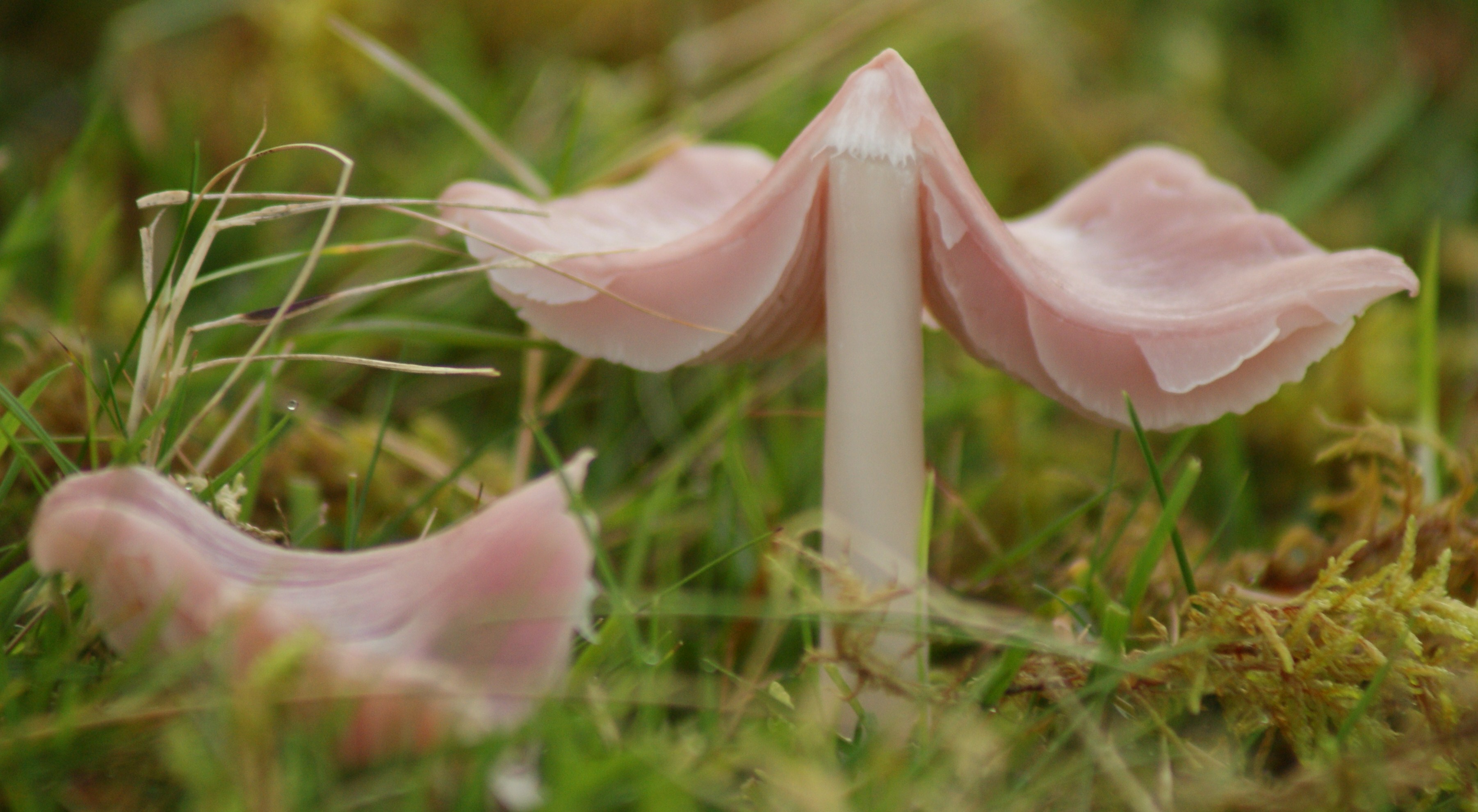
Walking up through the pasture, I took a detour to see if rabbits were still using a big warren below the old barn. Now that the ferrets have shown their mettle, I’m always on the lookout for ferreting opportunities. Sadly, those holes were choked with moss and thistles, but a small pink blob nearby caught my attention. It was a fungus of some description, and while one was open and slightly broken, another one was still closed and was being rapidly consumed by a vile black slug. I took a photograph and posted it on iSpot.com, where I was quickly informed that it was a pink meadowcap, commonly known as “the ballerina”.
Unlike so many of the things I have found during this project, “ballerinas” are actually quite rare, and I was pleased to have found it, even though it had none of the deadly, macho characteristics of “the sickener”…

 Bog Myrtle & Peat
Leave a comment