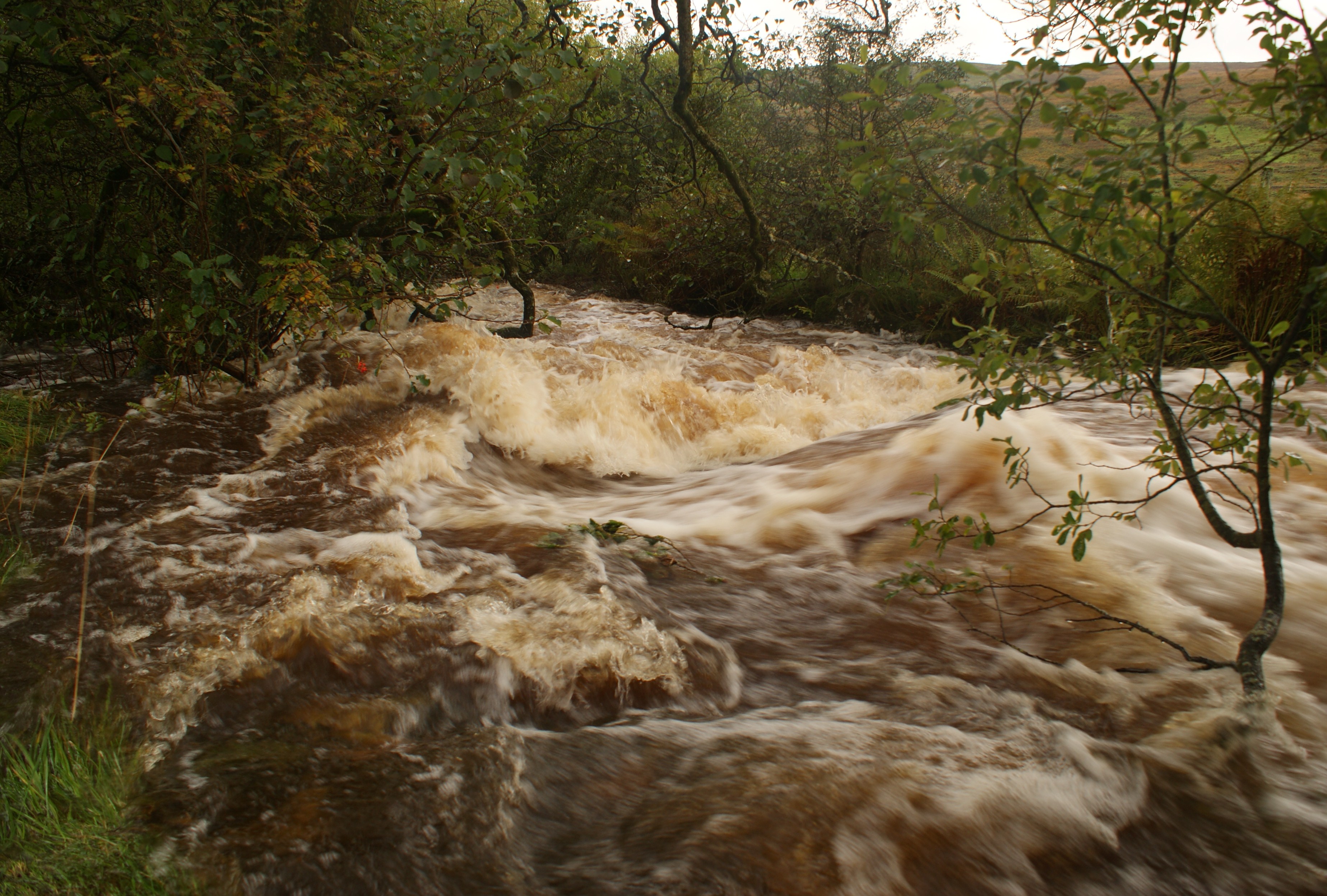
It didn’t seem to have rained all that hard overnight. I heard water splashing on the windows at around four o’clock as I busily rearranged my pillow, but there was only a miserable shower when I got up a few hours later and went out to feed the ferrets. I should have known that up on the hill, nothing is done by halves.
A knowledgeable friend recently offered to come up and advise me on creating what ecologists call a “multi-tiered canopy” in the windbreak above the farm buildings. I have been slashing away the sitkas and hemlocks over the past month to reveal about a third of an acre of clear land, surrounded on three sides by mature sheltering trees and facing out towards the south. It is an ideal spot to be redesigned as quality native woodland, and although it is quite small, layered storeys of dog rose, hawthorn and silver birch could prove to be a real winner for a variety of bird and mammal species. However, when we went up to look at the windbreak today, the hardest part was getting there.
Wild amber torrents of frothing water came tumbling off the hill like living animals. Soft, comfortable areas where the bog myrtle grows entertain a mild and passive trickle of limpid water during the summer, and it is sometimes easy to forget that the low lying areas are any wetter than anywhere else. Today we had a reminder. Great slate passages raced through the bogs, while the hills all around were split apart by snowy white bolts of water.
The final approach to the farm nearly smothered the car altogether, and with clouds gathering in the west, it looks like there is even more to come. If it had happened in June, the black grouse and their chicks could have had real trouble. As it is, I suspect that they are tucked away somewhere without a care in the world.

 Bog Myrtle & Peat
Leave a comment