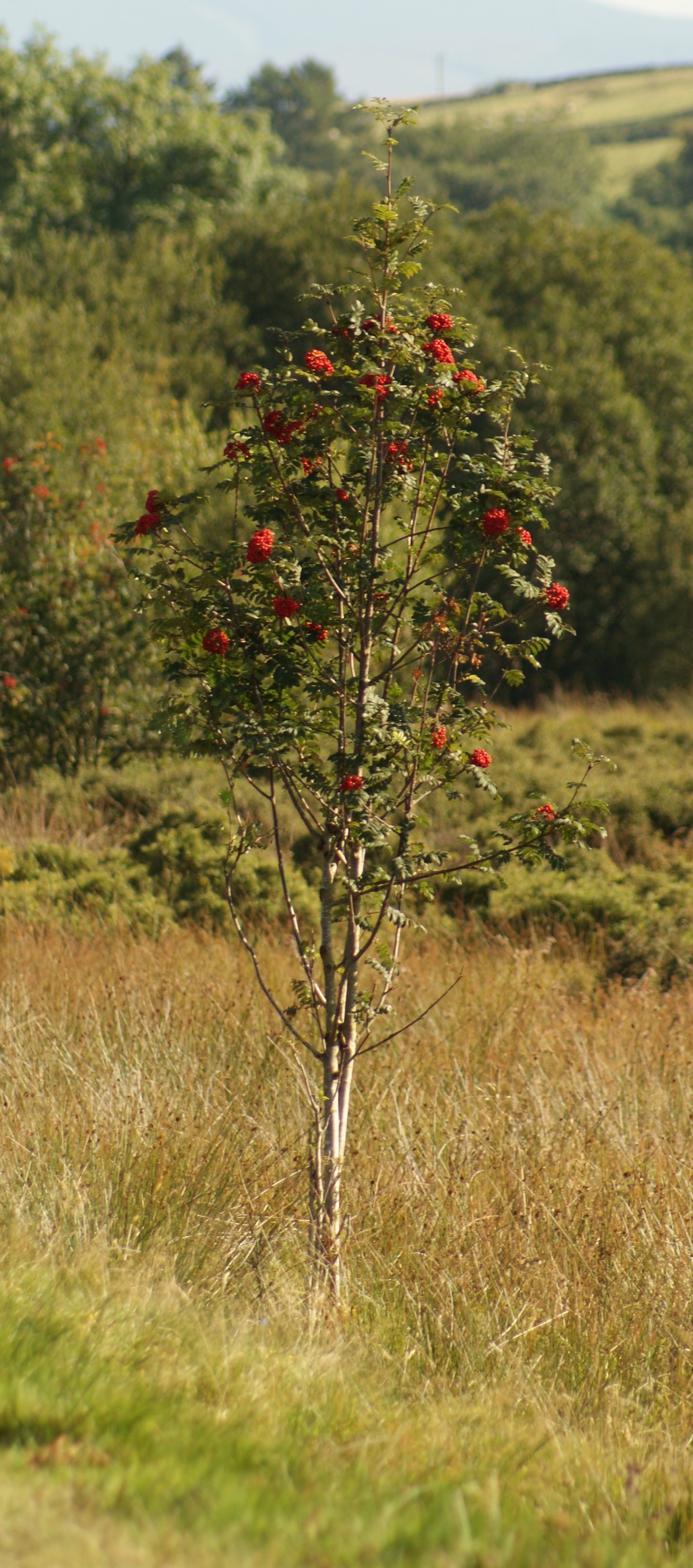
I have been forced to learn a great deal about trees throughout this project. Not that that has been a hardship. I now find them absolutely fascinating, and most of my spare cash is spent sampling trees from a variety of wholesalers up and down the country. The iconic tree for black grouse is silver birch; the birds love them and use the buds as valuable feed during the winter months. Alder, aspen, juniper and scots pine are also useful trees for black grouse during the year, but with autumn fast approaching, the birds will be looking for berries to bulk up for the cold days ahead.
Of all the trees available to provide berries in the uplands, rowans have to be the most famous. In Southern Scotland, they have become a traditional icon, linked to folklore, mythology and cultural history. There are songs and stories about rowan trees which have been in circulation for hundreds of years, and it is still widely considered to be bad luck to chop one down across the region.
I have been planting rowans since the start of this project, but have increasingly been doing so with an element of resentment. Rowan berries feed black grouse in the autumn, but for the rest of the year, they are relatively useless to the birds. It was only when I started to see the little trees come to life with red berries over the past six weeks that I feel prepared to review my opinion. Blackbirds, starlings and thrushes have already started to twitch the twigs, and I’m sure that it won’t be long before the spindly rowan tops are bending beneath the attentions of a blackcock or greyhen.
Next year, I will plant more rowans and mix them in with hawthorns to provide a berry feast for all the local birds.

 Bog Myrtle & Peat
Leave a comment