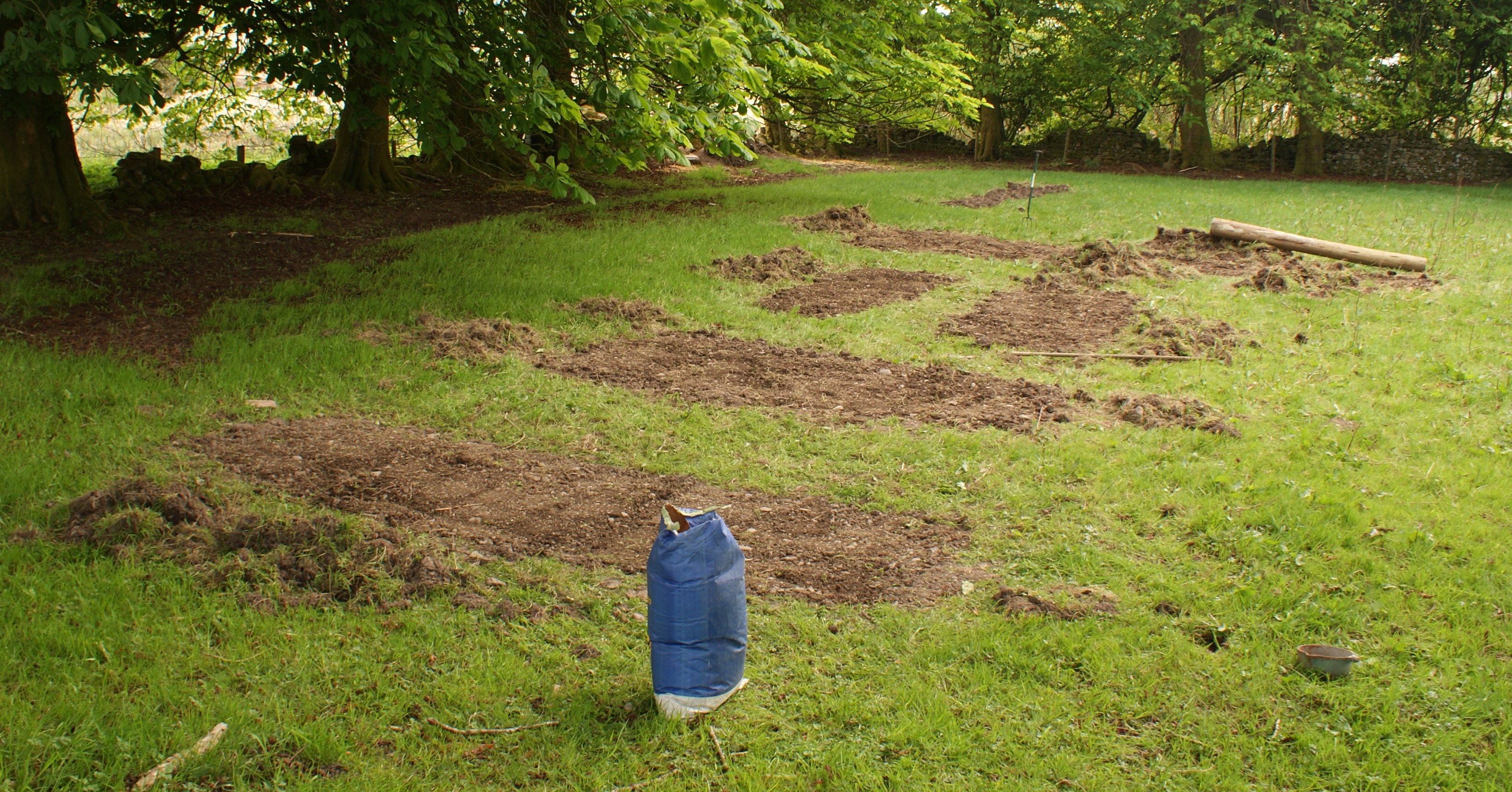
One of many suggestions to come from my recent meeting with John Cowan was the idea of putting in a so called “sacrificial crop” for the benefit of the black grouse. Despite being so much rarer than red grouse, blackcock actually seem to be rather easier to look after than their famous cousins. Historically, they happily entered arable stubbles in the autumn and winter to feed on fallen seeds, and once used to taking food from these artificial feeding stations, they can be fed quite reliably throughout the winter months. Until my silver birches grow large enough to supply natural food, it is an excellent idea to install a few patches of arable crop across the farm to keep the birds interested.
Oats are the traditional crop of the Scottish lowlands, and so it was with some trepidation that I ordered a sack of seed last week. I know nothing at all about planting and growing cereals, but I asked around and I hope I have now got the gist of it. Sacrificial crops are sown purely for conservation reasons and will never be harvested. As the oats grow up and die, they should flop over and leave a nice system of straw and black grouse food on the farm. Considering that a 25kg sack of oat seed cost me eight pounds, I must say that I don’t really mind not seeing a financial return on that investment.
Not having access to any agricultural machinery, everything has had to be done by hand. It is not hard to break the turf with a fork and leave it to dry, but it takes hours to sift out the grass and rip up the clumps by hand. It has taken two days to clear and sow half a dozen little patches of oats at the foot of the shepherd’s garden near where the black grouse was lekking this year, and I now can’t wait to see how they will turn out. Using a massive straining post to roll the patches not only compressed the soil but made them look satisfyingly neat and tidy.
I now plan to clear and drain a small patch of rushy bog on the hillside above the farm. Even if the worst comes to the worst and the black grouse are killed off by foxes in the next few weeks, it could be that having a nicely positioned little cover crop on the hillside will attract wild pheasants in the winter. As well as benefitting black grouse, cereal stubbles provide food for a number of different bird species in the cold weather, and birds like yellowhammers, skylarks, tree sparrows, linnets and buntings will get as much benefit as anyone.
It’s hard work in the hot sun, but it’ll all be worthwhile in the end…

 Bog Myrtle & Peat
Leave a comment