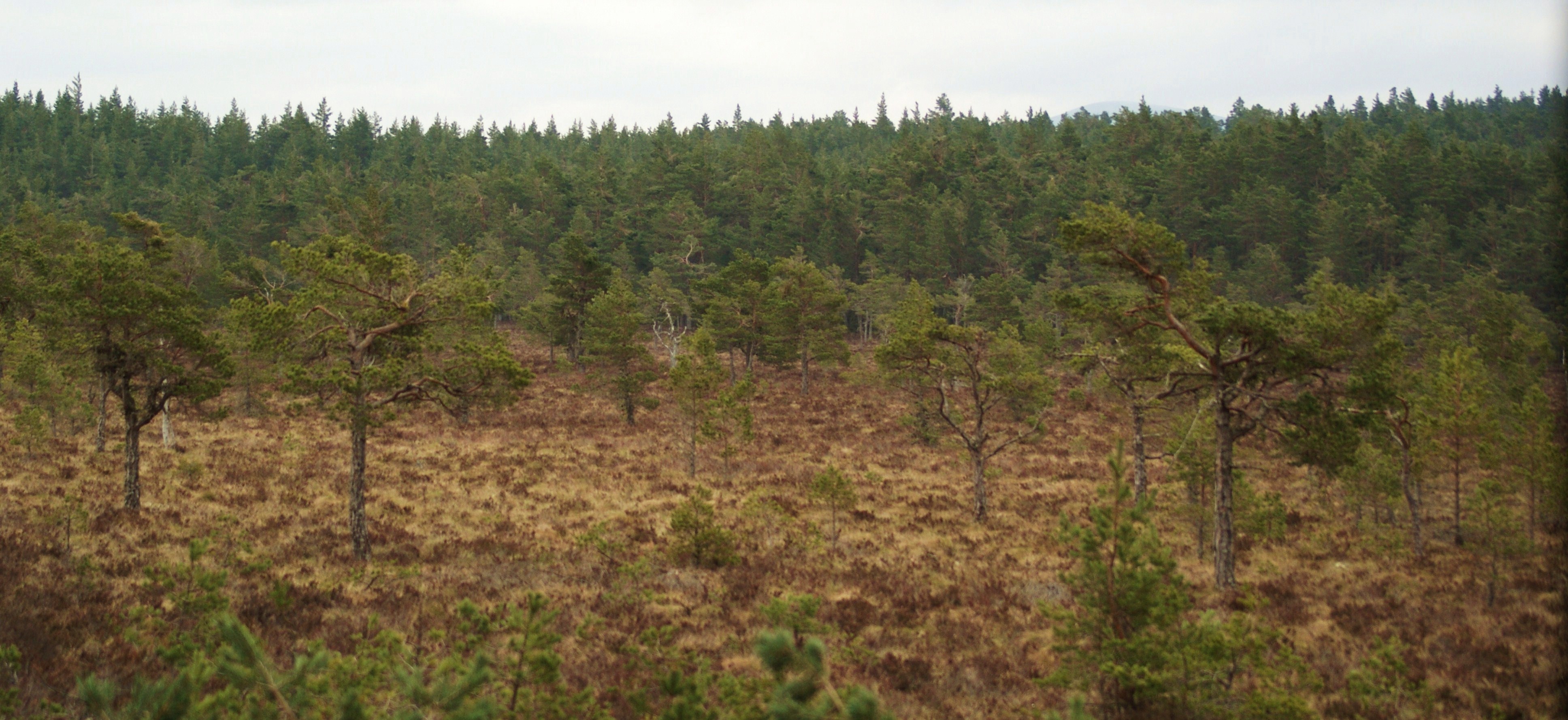
Black grouse aren’t the only birds who lek in the spring. Off in the distant pine forests of the highlands, some of the most fantastic birds in the British Isles are displaying for territories and mates with as much vigour and fury as any blackcock south of the central belt. I am currently on a fishing holiday in the furthest reaches of northern Caithness, and when I found out that I could drop in and see the capercaillie lek at Abernethy forest “en route” from Galloway, I jumped at the chance. Abernethy forest is run as an RSPB reserve just a few miles outside Aviemore, and it must be one of just a handful of places in the country where you can reliably encounter lekking cock capercaillie.
Unable to afford a B&B, I decided to drive up through the night to arrive in time for the display, which takes places shortly after dawn in the ancient pine woodlands of the Cairngorms National Park. As I sped up the A9, I spotted a territorial grouse cock keeping tabs on the traffic from underneath a highway crash barrier, and in just four hours, I had arrived. My trusty Vauxhall was smoking heavily and oozing an unpleasantly “hot” smell as I dashed to the hide to watch what promised to be one hell of a show.
Capercaillie are enormous. They are so big that when I saw one feeding on blaeberry shoots, I was instantly convinced that dinosaurs still roamed the earth. A grouse the size of a black labrador is a special sight, and seeing one in person was awesome. After a few “flutter jumps”, he settled onto a thick mound of blaeberry and hunched his head into his shoulders like a massive hen. Then it was all change. He had sensed another cock bird encroaching on his patch and he was not for backing down. With surprising agility, he hopped between tussocks of heather and engaged his rival.
Irritatingly, the confrontation took place behind a blasted scots pine tree, but CCTV cameras linked us to the action. They squared up to one another, stretching their necks and bristling their beards, dragging their drooping wings through the heather. Although they never actually came to blows, their fearsome movements made any potential combat seem like a lethal activity. Hooked beaks and jagged neck feathers gave the posturing birds the appearance of some kind of medieval armour smashing weapon, and when they began to wander apart again, it was almost a relief that no blood had been spilled.
I only know of one person who has shot driven capercaillie and he described the experience as “shooting at flying fortresses”. As the birds came roaring through the woods, he wasn’t sure whether to stand his ground or hide behind a tree. Having now seen them for myself, I think I know how he felt.

 Bog Myrtle & Peat
Leave a comment