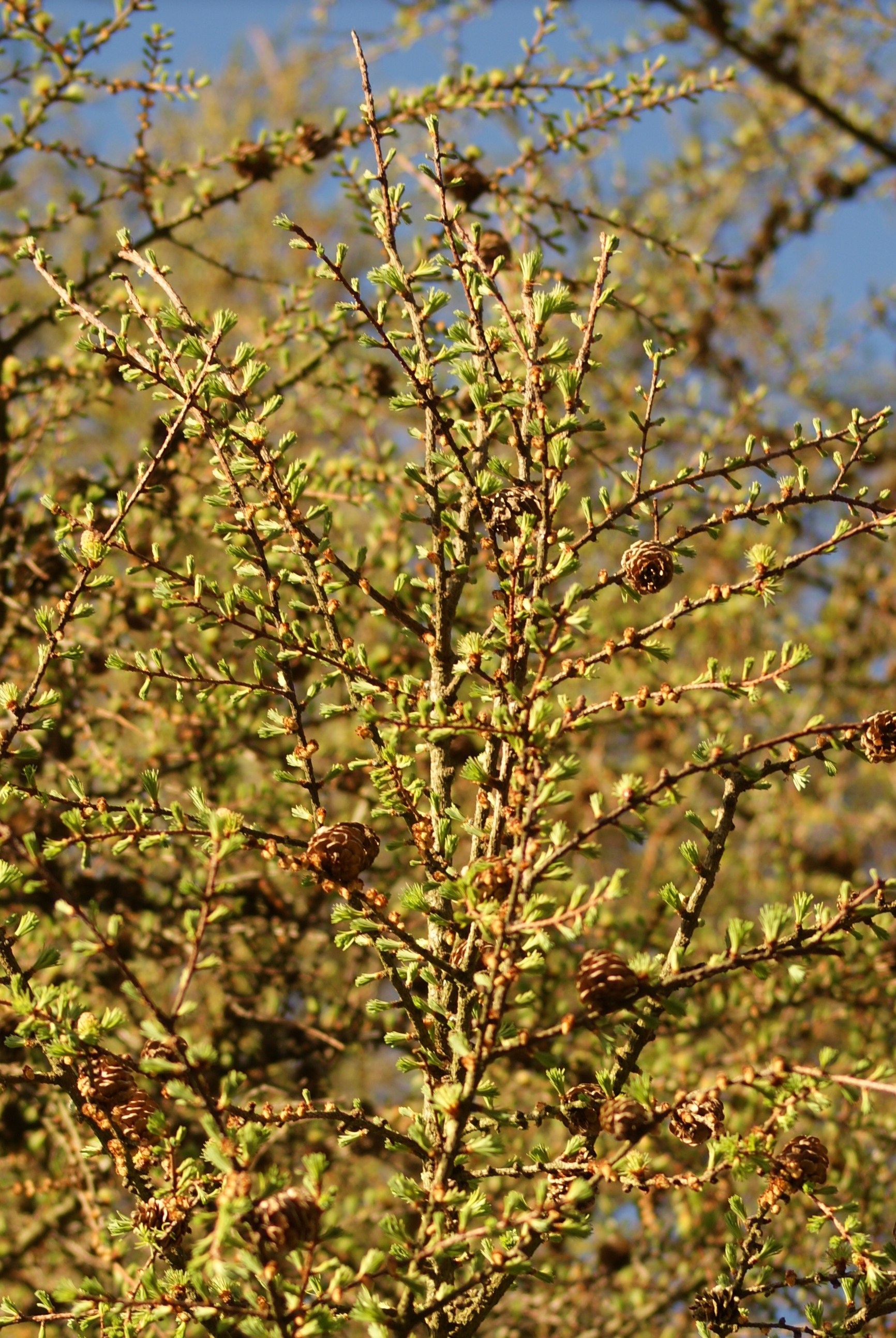
Larch trees are something of a new discovery for me. Before I began this project, all trees were dull, shapeless and ambiguously leafy. I could tell the difference between oak and horse chestnut, and I was only dimly aware of the existence of a handful of other species.
Coming to manage the Chayne and realising that the habitat there could be greatly enhanced by planting new trees, I have been placed on a very steep learning curve. So far, I have planted 35 silver birches, 4 scots pines and 2 wild cherries, along with an assortment of others including sycamores, ash, willows and junipers, but this is hardly even a beginning.
A few people have suggested that I plant some larch trees on the farm as well, and I must say that, to start with, I had no idea what a larch tree was. I have often wondered why large swathes of forestry plantation appear to have died during the winter, but it turns out that larch trees are deciduous, producing bristly buds in April and shedding all needles over the colder months.
Female black grouse particularly like eating these buds, and from them they receive a source of high energy food to help them through the breeding season. Larch is a very fast growing species of deciduous conifer, which appeals to my sense of impatience, and they will also provide feeding birds with cover and shelter throughout the year. It looks like I’ve got more planting to do.

 Bog Myrtle & Peat
Leave a comment