It hasn’t taken long for the stock proof heather laboratory to come into its own. As an experimental “sheep free” zone, I built the enclosure to see what would happen to the moor if there was no livestock on it at all. Already, it is looking greener than the surrounding area and stiff shoots are appearing amongst the heather.
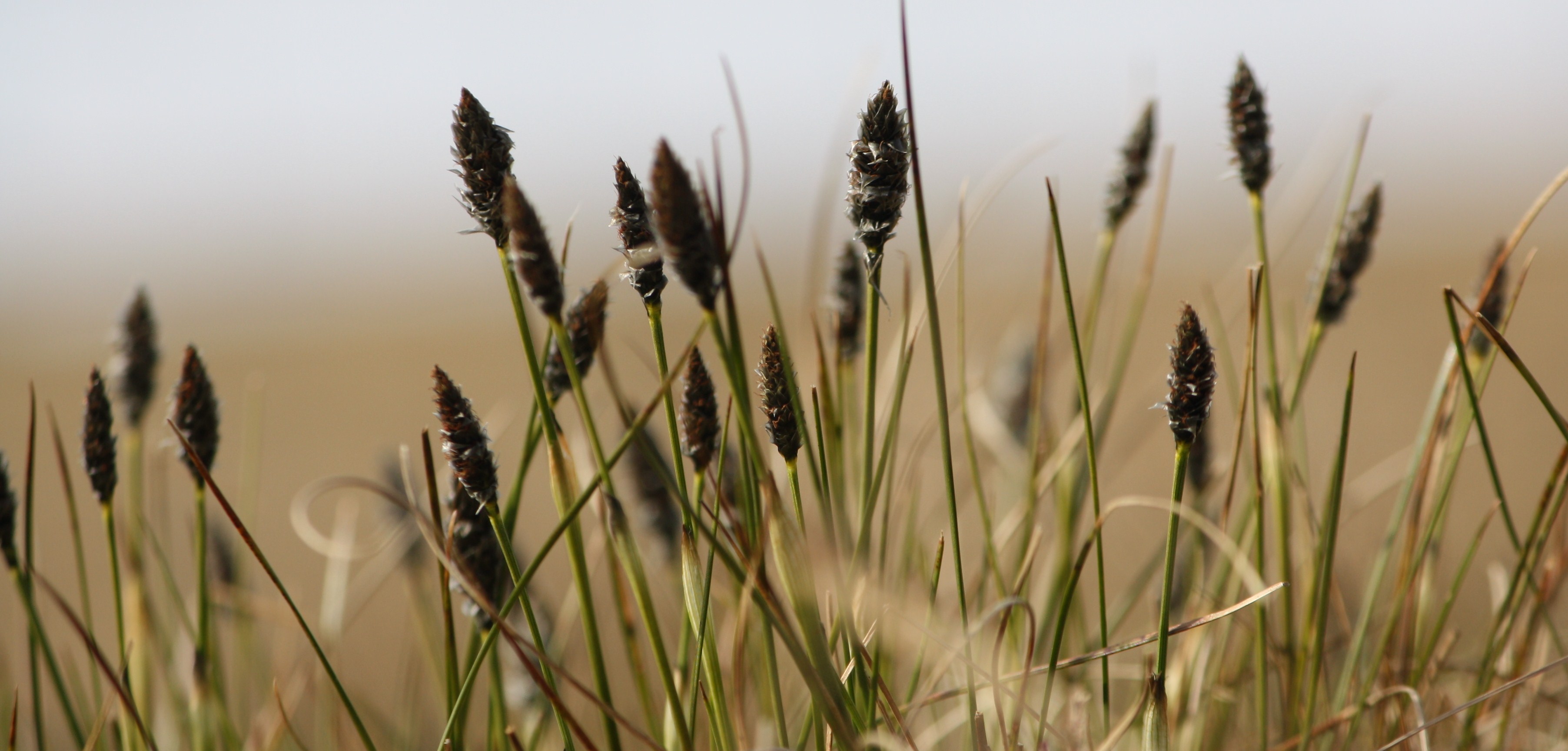
Shaped like silvery grey bottle brushes, the mystery plant began to appear across the farm around a month ago, and even though I gathered samples and tried to identify them, I had no luck at all. Over the last few weeks, the little brushes fanned open like papery pine cones and tiny yellow cylinders emerged from within. Still unable to identify them, I began to worry that this was an invasive and unhelpful plant, set upon smothering the heather and reducing the quality of the available grouse habitat.
When I saw that it was growing in unusually thick tufts inside the heather laboratory, I realised that it is being heavily grazed by sheep, and only the protection of the fence was saving the delicate shoots from destruction. It was only when I received an email from Chris Land, a visitor to this blog, mentioning “hare’s tail cotton grass” that I did a search online for more information and made the connection.
Eriophorum vaginatum is the scientific name given to cotton grass, and the flowers of the species are a notable favourite amongst browsing animals like sheep and deer in the late winter and early spring months. More importantly, young flowers provide black and red grouse with important protein in the run up to breeding when heather is at its least nutritious and nothing else shows any sign of life.
To have found a natural abundance of hare’s tail cotton grass in the stockproof enclosure shows how sheep have been eating into grouse food supplies, but I now see in my GCT “Red grouse and moorland management” handbook that cotton grass likes to be grazed and expands under heavy grazing pressure. It seems that more sheep mean more cotton grass but less available flower heads for the grouse.
In this case, the argument for removing sheep from the moor altogether just became far more complicated.

 Bog Myrtle & Peat
Leave a comment