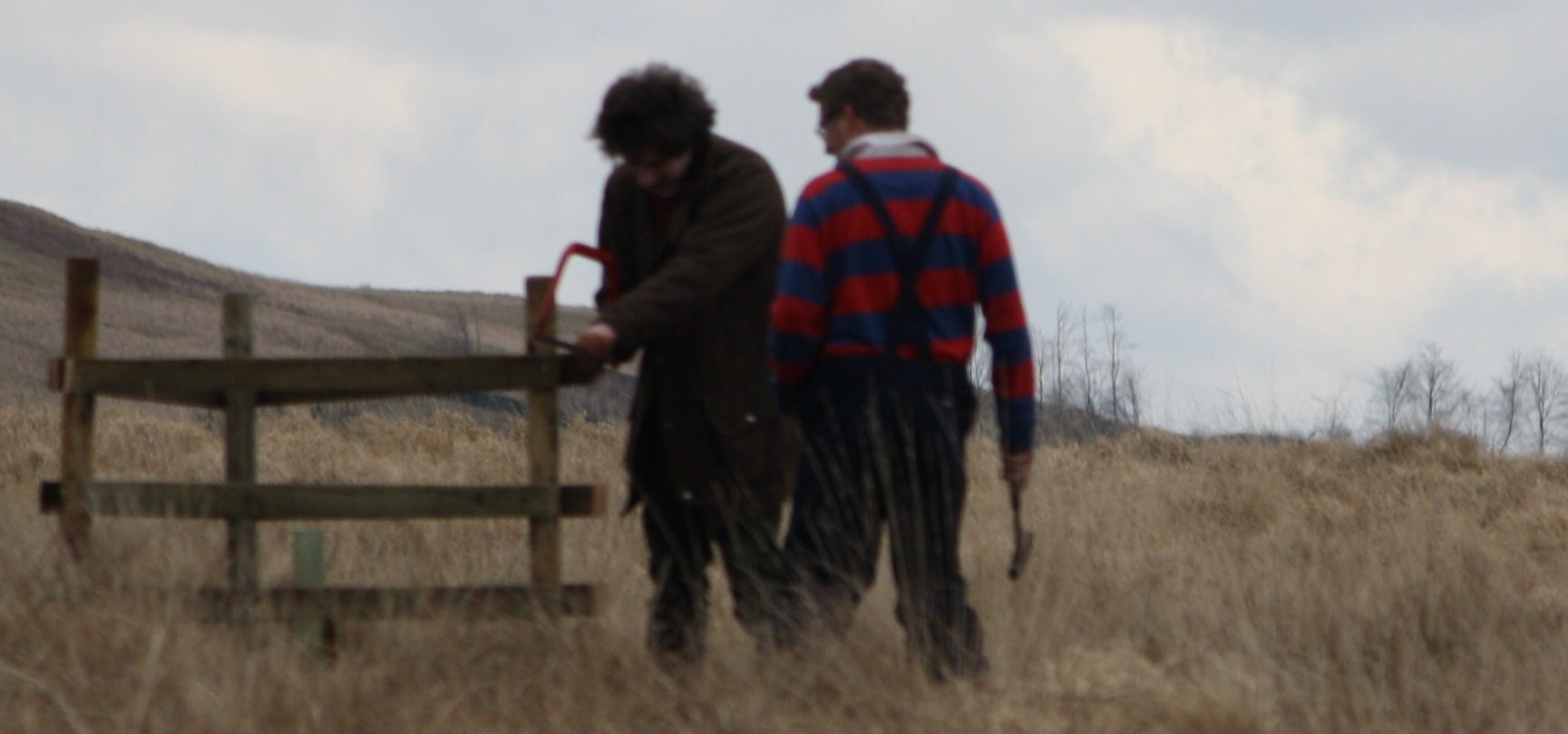
As well as planting a juniper stand along the boundary of the forestry block, it is probably a good idea to stretch out the woodland margins as much as possible. To this end, I came up with a plan to plant a scattering of scots pine trees and silver birches a hundred yards out from the main block. Over the next few years, they should start to show as extended cover, drawing birds out of the dense woodland and into the open.
All the sheep on the farm have been taken off the moor in preparation for lambing, so grazing pressure on the valuable red grouse habitat has been temporarily lifted, but now they are packed densely into the low ground favoured by the black game. All this movement of livestock is quite temporary, but it does present complications for tree planting.
The area of land which I chose to plant is not particularly overgrazed, but over years of neglect, it has become a highly flammable tinderbox of purple moor grass. The leaves of this troublesome plant have grown up and died back to such an extent that each tussock is now an eighteen inch high mound of crisp beige leaves, smothering the last remaining patches of cross leaved heather with the sheer volume of dead and dying organic matter. Ideally, this could all be burned off, but since it is so close to the forestry, it presents dangerous implications that are better avoided altogether.
The purple moor grass is so dense that it could become a limiting factor in my attempts to regenerate this area of black grouse habitat, and I now have to come up with a way of safely destroying or removing it from the equation altogether. While working on the tree guards, I discovered a female black grouse feather in the long grass. Just when it seems like the job is becoming an impossible mountain to scale, a tiny moment’s encouragement really does make all the difference.

 Bog Myrtle & Peat
Leave a comment