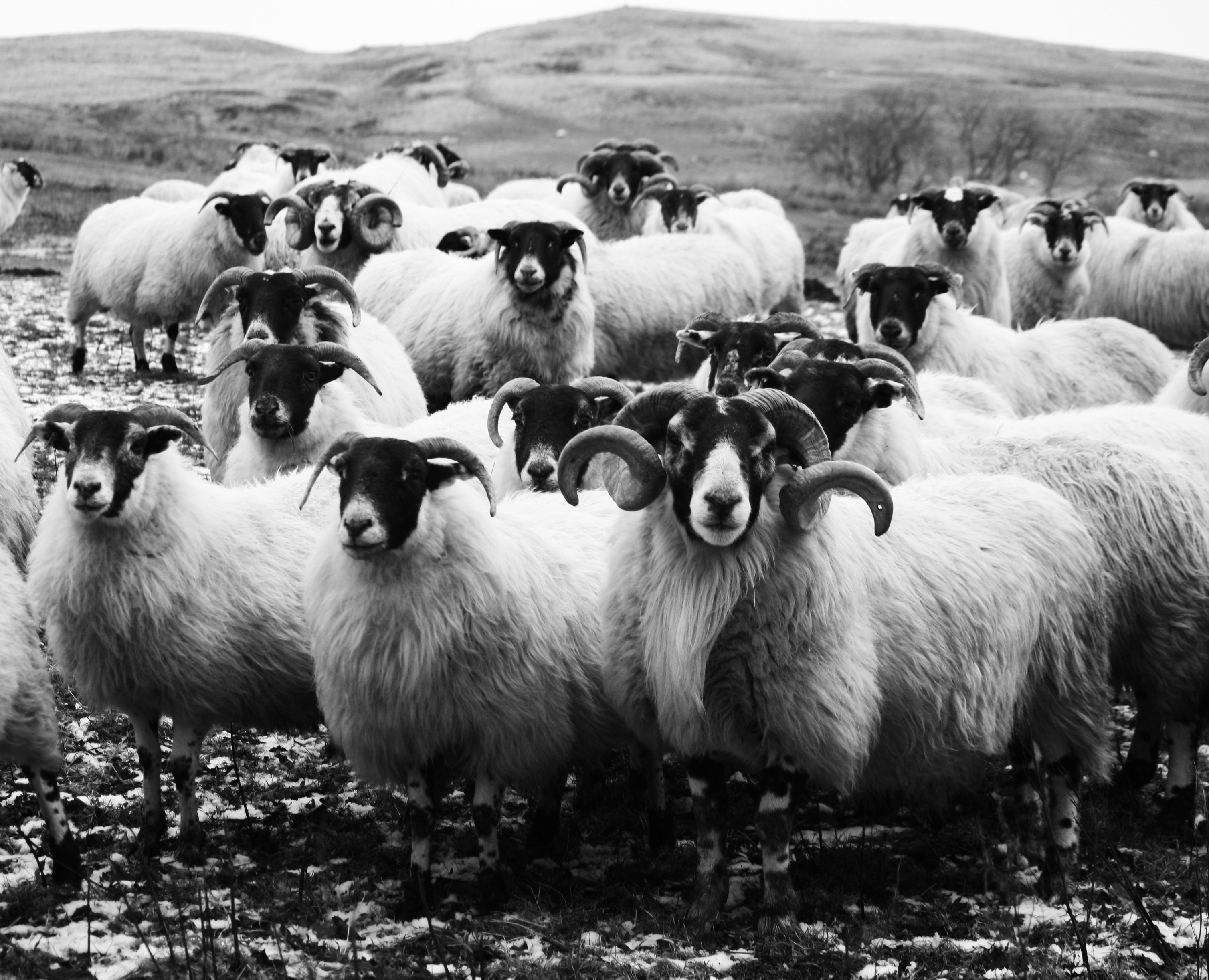
Each year the Chayne becomes less and less able to support grouse. The number of sheep on the farm is fairly constant all year round, but these animals gradually chip away at the heather and the other valuable shoots of bilberry, myrtle and willow. Unless an area is specifically fenced off and protected, nothing but indigestible purple moor grass, wavy hair grass, soft rush and mat rush can be found. The small patches of heather are declining each year, and the few “black” areas of hillside are diminishing into non existence.
Removing sheep from the farm altogether is not an option at the moment. The tenant has kept sheep on the farm for time immemorial and the animals themselves are a vital part of Galloway’s rural economy. They support a shepherdess who lives in the house that would otherwise be empty and they provide a foundation for the final vestiges of rural culture, but a little more thought to their impact on the moorland could make a huge difference. If heather stands are going to return and flourish on the Chayne, some sort of system needs to be formulated whereby grazing pressure can be eased, if not eliminated. Sheep and grouse could easily co-exist on the Chayne, but the current arrangements cannot continue unchecked.
As an experiment, I have decided to fence off an area of heather before spring begins to see what difference removing livestock will make to the diversity and quality of the enclosed plants. I have chosen a 50m x 20m area of closely nibbled “carpet” heather, and once it has been fenced off, I will use it as a heather “laboratory”; a place where I can introduce plants, sow seeds and observe the progress of the protected heather.

 Bog Myrtle & Peat
Leave a comment